
van Gogh and vertigo
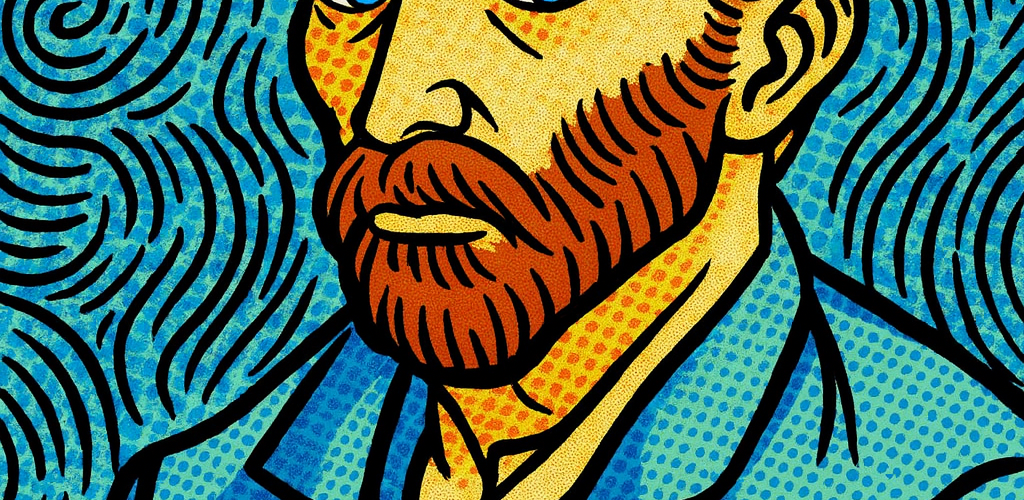
For decades, people believed Vincent van Gogh had epilepsy. Modern physicians think it was Ménière’s
I keep finding myself thinking about Vincent van Gogh—usually while lying flat on the couch waiting for the latest vertigo episode to end. When the walls spin, waiting is all you have. You can’t work. Can’t drive. And you certainly can’t stand up with dignity. All that’s left is thinking, which is probably why philosophers spent so much time sitting down.
But why van Gogh? Simply, that researchers now believe our talented painter didn’t have epilepsy, as everyone once assumed; turns out, it was more likely Ménière’s disease. Ménière’s! The same inner-ear circus act I’ve been hosting for years. Suddenly, I feel a kinship with Vincent. Bonded, not by art, but by vertigo.
Until recently, I had limited knowledge of van Gogh’s life: He painted sunflowers. He cut off his ear. He had the emotional stability of a soufflé. But then I learned he wrote nearly 800 letters in the six years before he died. Imagine how prolific he would have been had he had access to email. Even more impressed, tucked inside those letters were sketches, confessions, and descriptions of vertigo attacks that lasted for days. I get one episode and start drafting my will.
Which is why it’s difficult to imagine that, as such a creative tour du force, Vincent van Gogh had Ménière’s disease. Clearly, he made exceptional use of the times he wasn’t suffering.
In his letters, he wrote how he would sometimes go months without symptoms. Anyone with Ménière’s knows this pattern well: long stretches of peace followed by sudden, uninvited chaos.
Receiving no clear diagnoses at the time, van Gogh believed he had epilepsy. He was so troubled by his health that he checked himself into an asylum in 1889. This, of all places, is where he did some of his best work: Irises, cypresses, gardens, and that little doodle known as The Starry Night.
Nature was his refuge. He painted outdoors, chasing sunlight the way some people follow Taylor Swift. He described moments of “frightening clarity” when the world was so beautiful it overwhelmed him. I get frightening clarity too, but it’s usually when I stand up too fast.
Did his illness shape his art? We’ll never know. But when I look at The Starry Night—those swirling skies, those dizzying strokes—I can’t help but think, “Vincent, were you painting the landscape or your symptoms?” That painting and the style found in so much of his other work, has a tilting, spinning quality that feels familiar.
In his final months, van Gogh experienced deep despair. Circumstances surrounding his death at 37 are still a mystery. Some say suicide, others posit darker theories. Whatever the truth, the man lived a life as turbulent as his brushwork. We’ll never know for sure whether Vincent van Gogh had Ménière’s disease. However, the vertigo he endured throughout his life and described frequently in his writings, were surely defining and must have have greatly influenced his work as an artist.
He sold only one painting in his lifetime. I once sold an old sofa on Craigslist and felt like a titan of industry. Van Gogh didn’t care about approval. “I try more and more to be myself,” he wrote, “caring relatively little whether people approve or disapprove.” A refreshing attitude in a world where people apologize to their smart speakers.
And then there’s the line that gets me every time: “I am always doing what I cannot do yet, in order to learn how to do it.”
We can all learn from that.


