Not drunk. Just dizzy.
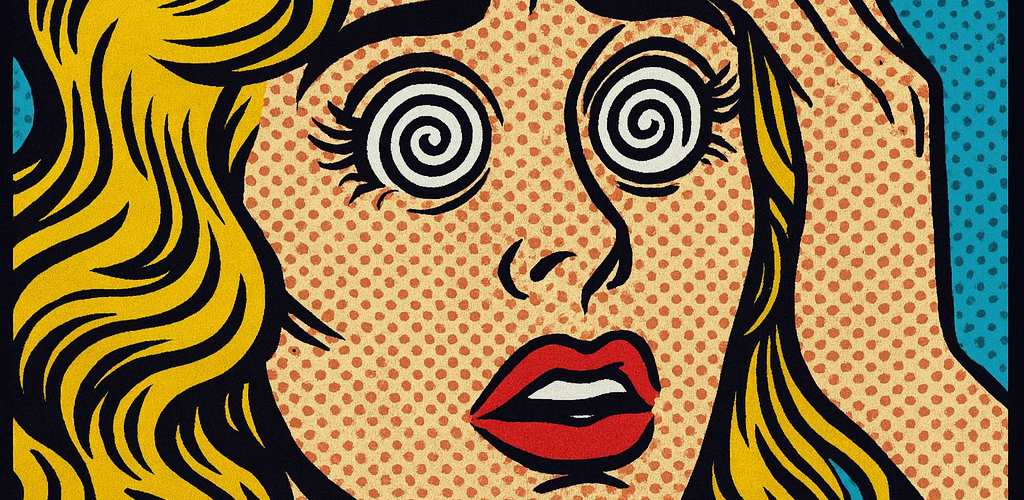
A vertigo attack changes how people look at you. And not in a good way
The vertigo that accompanies Ménière’s isn’t gentle. And it’s not like you can count on your body to cooperate. You’re not going to get a polite tap on the shoulder and hear, “Excuse me, in a few seconds you’re going to feel a real shimmy in this thing.” The reality is much less merciful. Most likely involving an embarrassing scenario played out in public. With its signature symptoms of vertigo and instability, Ménière’s disease sufferers are often accused of being drunk.
The art of becoming the center of attention
Dizzy episodes are the kind of events I love to dread. No one wants to become a public spectacle, certainly not without advance warning. Some of you are nodding. You know the drill. One moment you’re standing in the produce section at the grocery store; moments later you’re holding onto the shopping cart for dear life. Usually, it’s no big deal. You’ve been through this before. So you wait. You let the swirling vision slowly fade into the far recesses of your brain. You get your equilibrium back and compose yourself. That’s when you glance around the room, or wherever you happen to be at the time, and notice that people are staring—and not in a way that confers admiration. Some gawk. Others move away. Their expressions reveal one primary thought: “Drunk.”
It’s at those times I wish I had a sign. Or, even better, that I were wearing a tee-shirt with big, bold letters: “Not drunk. Just dizzy.”
The “less obvious” impairment
Undeniably, Ménière’s is a little hard to spot. Most people have never heard of the condition, let alone know what it looks like in real life. Those of us who periodically experience its wrath appear to the outside world like fully functioning individuals. There’s no wheelchair or cane or service dog to alert onlookers that an impairment lurks within. There’s only the sudden swoon, the teetering and stumbling. Possibly a drop to the floor, that gives us away. Which is why social situations are so difficult to navigate. Declining a drink at a party may be a little awkward, but navigating the same event during a period of dizziness is particularly stressful. When strangers observe your instability, they can’t help but make assumptions: Drunk. High. No self control.
I’d like to show them what control looks like.
A few words about control
The truth is, like many of my Ménière’s compatriots, I avoid alcohol. As tempting as a martini or a glass of wine might be, drinking it can trigger symptoms. The same goes for sugar (see this YouTube video) and salt, which are both troublesome. And don’t get me started on caffeine. Imagine the irony of living in the Pacific Northwest, near Seattle, whose other name might as well be Caffeineopolis. Yes, Ménière’s has a tendency to be a real buzz kill. To the average sufferer, the world is a smorgasbord of potential dizzy with a side of nausea. It gives me no pleasure turning down a glass of champagne or a piece of cake at a wedding reception while others enjoy. My benefit? Avoiding vertigo attacks.
And a few more about assumptions
Ironically, one of the biggest challenges a person faces with Ménière’s isn’t the dizziness or the nausea or the unpredictability—it’s the judgment. The sideways glances. The whispered comments. The wrong assumptions. This condition doesn’t just mess with your balance; it messes with your social clout. And your character. All of it misguided and unnecessary.
So next time you see someone passing by, perhaps not in a straight line, don’t immediately assume they’ve been hanging out a little too long at the spiked punchbowl. Lead with empathy. Stop and consider this: that person might not be drunk, just dizzy. Her or she might be battling an invisible villain named Ménière. And trust me—he can be a real jerk.


