
Hearing loss and social bias
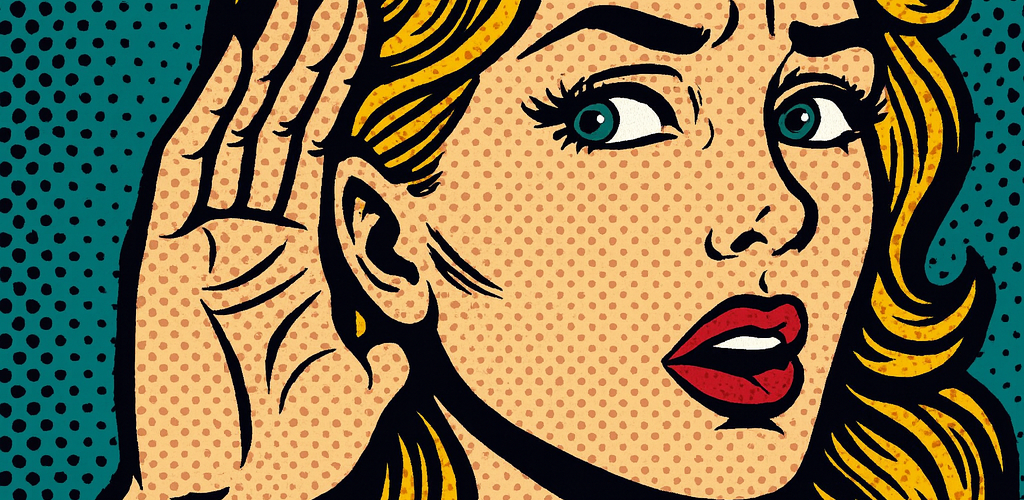
“Never mind.” And other words that make me feel like I’m not worth the effort
Losing one’s hearing is a challenge unto itself. But the real kicker is the social bias that trails along like toilet paper stuck to a shoe.
People like me don’t just miss words; we’re often treated as if we’ve misplaced our intelligence along with the decibels. Speaking from my own experience, I’ve observed impatience, exclusion, or outright dismissal from others in social and business settings. Nothing says “you don’t matter” quite like someone waving off your request for a repeat with, “Oh, never mind.” Never mind? For those of us with hearing loss, “never mind” translates to “you’re not worth the effort,” which is a pretty harsh message for a person who simply didn’t catch the last three syllables.
Worse, once people learn about my situation, they’ll often respond by raising their voices to stadium-announcer levels. Ask someone to repeat a sentence, and suddenly they’re bellowing like an auctioneer at the county fair. Meanwhile, I’m left wondering whether to explain—again—that hearing loss doesn’t mean I require a megaphone, just some clarity.
Judgment residue
I wear both a hearing aid and an audio processor for my cochlear implant. They are amazing devices for which I am extremely grateful. A titanium hip or a pacemaker isn’t obvious to strangers, but the little disk stuck to the side of my head certainly is. “What’s that?” some ask. When I tell them, they’ll respond with either genuine awe or a mocking form of “Oh, that’s interesting.” To the latter, such a device is like a neon sign flashing “old!” or “fragile!” even when worn by someone who walks four miles a day and knows the difference between “affect” and “effect.”
In the business world, such scenarios are especially difficult. Meetings can be stressful—on the phone, virtually, or in person. Background noise makes it difficult for people who are hard of hearing to isolate conversation. And despite the vast array of modern technologies, the room or video call may not offer Hollywood Bowl-quality acoustics. Imagine how demoralizing it is trying to contribute in a meeting while your colleagues assume you’re confused or simply not up to the task. Letting people know about your hearing loss seems like a natural solution but you don’t always get the opportunity. There’s simply no chance to “buy a vowel” when the meeting is clipping along, the room is noisy, and people are anxious to get on to the next thing. And let’s be honest. No one likes to be the one calling attention to a speaker who mumbles, speaks too softly, or simply talks too fast.
A day at the Improv
This level of awkwardness is why those of us with hearing loss become masters of improvisation—reading lips, deciphering context clues, and nodding along with the confidence of someone who has just been nominated for a Pulitzer. I try to laugh at the absurdity, to find grace in the misunderstandings, and to remind the world—gently or otherwise—that hearing loss doesn’t diminish my competence, wit, or humanity. Though sometimes it sure feels like it.
A gentle suggestion…
For those of you who are not experiencing significant hearing loss, let me offer a few words of advice: In conversations, try your best to be aware, kind, and—above all—human. We all have limitations. Some of them are just more noticeable than others.
And for all of you who are struggling with sound—or the lack thereof—be gentle with yourself, too. Don’t confuse “I can’t hear” with “I don’t belong.” Everyone feels like the weirdo at times. You have the right to exist. To have the right to speak up and be accepted on equal footing. Managing the biases around hearing loss can be maddening and sometimes isolating. But keep trying. Be an ally for yourself and others. Let people know where you stand. And when all else fails, you can always laugh at the absurdity. It helps me every time.


